Overview of the banking and financial sector in the Dominican Republic
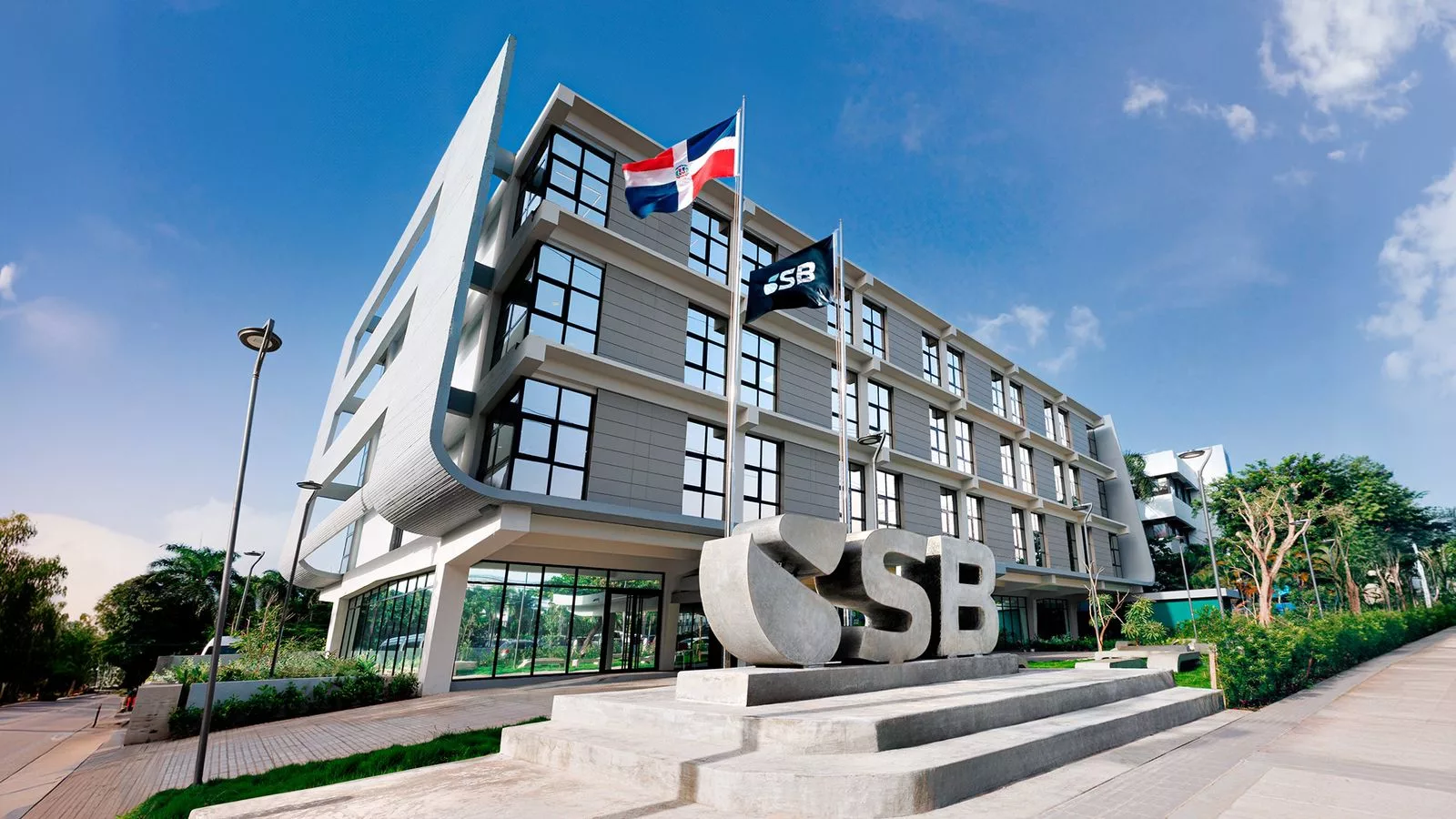
Facade of the Superintendency of Banks SB (External source)
The Dominican Republic has a modern, regulated , and constantly evolving banking and financial sector that plays a fundamental role in the country’s economic development. Through a robust regulatory framework and solid institutions, the Dominican banking and financial system has gained local and international trust, offering a wide range of products, services, and investment opportunities.
This article provides an overview of the Dominican financial sector, covering its historical evolution, the legal framework that regulates it, the main supervisory entities, available services, and growth prospects.
The Dominican financial system is regulated by a set of laws and regulations that seek to guarantee its stability, solidity, and transparency. This regulatory framework is supervised by different entities, each with specific functions, which act in a coordinated manner.
The legal framework of the Dominican financial system is based mainly on:
- The Constitution of the Dominican Republic
- Monetary and Financial Law No. 183-02 , which establishes the legal bases for the organization, operation and supervision of the national monetary and financial system.
- Regulations issued by the Monetary Board and instructions issued by the Central Bank and the Superintendency of Banks
- Other sectoral and complementary laws such as Law No. 249-17 on the Securities Market, Law No. 146-02 on Insurance and Surety Bonds , Law No. 155-17 against Money Laundering and Financing of Terrorism , etc.
The main supervisory entities are:
Monetary Board of the Dominican Republic
It is the highest body of the national monetary and financial system. Its main function is to determine the nation’s monetary, exchange rate, and financial policies. Its main responsibilities include:
- Formulate and approve the country’s monetary, exchange rate and financial policies
- Approve the monetary program and oversee its execution
- Issue the monetary and financial regulations necessary for the development of the Monetary and Financial Law
- Grant and revoke operating licenses for financial and foreign exchange intermediation entities, as well as approve mergers, acquisitions, and other similar arrangements between said entities, at the proposal of the Superintendency of Banks.
- To hear and rule on hierarchical appeals against acts of the Central Bank and the Superintendency of Banks in their respective jurisdictions.
- Approve and submit to the Executive Branch proposals for modifications to monetary and financial legislation
Central Bank of the Dominican Republic (BCRD)
It is responsible for implementing monetary and exchange rate policy in accordance with the Monetary Program approved by the Monetary Board. It is also responsible for maintaining price stability and ensuring the proper functioning of the payment system. Other main functions include:
- Regulate the issuance of currency
- Supervise the interbank payment system
- Compile, produce and publish key economic and financial statistics
- Manage the country’s international reserves
Superintendency of Banks (SB)
It is the entity responsible for supervising the country’s financial intermediation entities. Its key functions include:
- Supervise risk management and regulatory compliance by financial intermediation entities
- Conduct periodic inspections and regulatory audits
- Apply corrective measures and administrative sanctions when non-compliance is detected
- Ensure the protection of financial system users and provide them with assistance through the User Services and Protection Office (Prousuario).
Other key players
In addition to the main entities mentioned above, there are other organizations that, although they have a specific regulatory focus, play a complementary role relevant to the proper functioning of the Dominican financial system:
- Superintendency of the Securities Market: regulates the capital market, facilitating the channeling of savings into productive investment, which indirectly contributes to the stability of the financial system.
- Superintendency of Pensions: oversees and regulates the pension system, whose management and administration significantly impact the country’s financial flows and the liquidity of the financial market.
- Insurance Superintendency: regulates and supervises the insurance sector, whose activity is closely linked to asset and financial stability, providing guarantees that favor economic activity in general.
It also has support and coordination bodies, such as:
- The Financial Analysis Unit (UAF) : attached to the Ministry of Finance, analyzes suspicious transactions related to money laundering and terrorist financing, strengthening the transparency and security of the financial system.
- The General Directorate of Internal Revenue (DGII) : although it does not directly supervise financial institutions, it actively participates in tax audits related to trusts, investment funds, and other financial instruments.
Main financial products and services
The Dominican financial system offers a wide range of products and services designed to meet the needs of both individuals and legal entities, ranging from basic savings operations to complex investment instruments and structured financing.
Traditional commercial banking products
- Savings accounts, checking accounts, and financial certificates : these are the basic instruments for managing funds. Institutions offer products in local and foreign currencies, tailored to different customer profiles.
- Personal, mortgage, and commercial loans : Financial institutions offer financing for consumer loans, home purchases, business expansion, machinery purchases, working capital, and other purposes.
- Credit and debit cards : Widely accepted nationally and internationally, they are one of the most widely used products and represent an important source of income from financial services.
- Safe deposit boxes and collection services : complementary services that strengthen the banking relationship with customers.
Business and corporate banking
- Credit lines and structured financing : Aimed at medium- and large-sized companies, these facilities allow for larger-scale operations and more flexible terms, including loan syndication.
- Financial leasing (leasing) : used especially by companies to acquire productive assets without committing working capital.
- Factoring and confirming : Short-term financing tools that allow companies to improve their liquidity by transferring receivables or making advance payments to suppliers.
Trust services and wealth management
- Trusts : Under Law No. 189-11, they have become established as a versatile tool for financing housing, infrastructure, asset management, and estate planning projects, among others.
- Private banking and investment management services : Aimed at high-net-worth clients, these services include financial advisory services, portfolio structuring, and access to capital market products.
Stock market and investment funds
- Corporate and sovereign bonds , stocks , commercial paper , shares in open or closed-end investment funds : instruments available to institutional investors and individuals interested in diversifying their portfolios.
- Real estate funds , infrastructure development funds , and funds specializing in strategic sectors are growing, thanks to a favorable regulatory framework and the interest of market players.
Innovation and digital services
- Online banking and mobile apps : Most institutions have digital platforms that allow for real-time transfers, payments, investments, and inquiries.
- Electronic payments and digital wallets : on the rise, especially among young people and micro, small, and medium-sized enterprises (MSMEs), driven by fintechs and partnerships with traditional banks.
- Digital onboarding, electronic signature, and biometric validation services are facilitating financial inclusion and reducing operating costs.
Investment and Development Opportunities
The Dominican financial environment, characterized by macroeconomic stability, a favorable legal framework and a growing interest in innovation, presents multiple opportunities for investors, entrepreneurs and institutional actors, both local and foreign.
Financing for MSMEs
Financing for MSMEs continues to be a priority for the country’s economic development. This has generated concrete opportunities for the creation of specialized funds, the development of crowdfunding platforms, and the emergence of fintech initiatives focused on digital credit, thus facilitating access to credit with preferential terms for this business segment.
Development of trusts and investment in infrastructure
Furthermore, Law 189-11 on Trusts has enabled the structuring of efficient vehicles for investing in real estate, road infrastructure, education, healthcare, and energy projects, in addition to managing public funds and facilitating public-private partnerships (PPPs). In this context, significant opportunities arise to participate in affordable housing trusts, structure closed-end investment trusts with tax benefits, and invest in projects under PPP schemes in accordance with Law 47-20 on Public-Private Partnerships.
Capital market expansion
The expansion of the capital market, driven by Law No. 163-21, Promoting the Placement and Marketing of Publicly Offered Securities , also represents significant opportunities. The growing interest in corporate bonds, closed-end funds, and collective instruments has boosted the sector. Investors have the opportunity to participate in private placements and public issuances, invest in collective vehicles specifically designed for institutional investors, and contribute to the development of ESG instruments (green, social, and sustainable bonds).
Financial innovation and fintech
The Dominican fintech ecosystem , although still consolidating, is already showing notable growth in areas such as digital payments, alternative financing, investment services, insurance technology, and cryptoassets. The future approval of a framework law for this sector will generate new opportunities for strategic alliances between fintechs and traditional banks, the creation of digital financial management platforms, and the implementation of a regulatory sandbox that allows for innovation with innovative financial products.
Sustainable finance
Regarding sustainable finance, the Dominican Republic is showing interest in integrating environmental, social, and governance (ESG) criteria into its financial and public policy. This promotes opportunities for issuing and investing in green bonds, financing energy projects through sustainable vehicles, and creating climate-focused financial products.
Foreign investment in the financial system
Finally, foreign direct investment in the Dominican financial system remains attractive thanks to a transparent legal framework, international trade agreements, and regional financial integration. Opportunities include acquisitions or mergers with local entities, the establishment of financial representative offices, and participation in investment funds with regional or sectoral exposure.
Conclusion
The Dominican Republic’s banking and financial system constitutes one of the pillars of its economic development. Its historical evolution, its regulatory structure, and its growing diversification position it as a reliable, competitive environment full of opportunities.